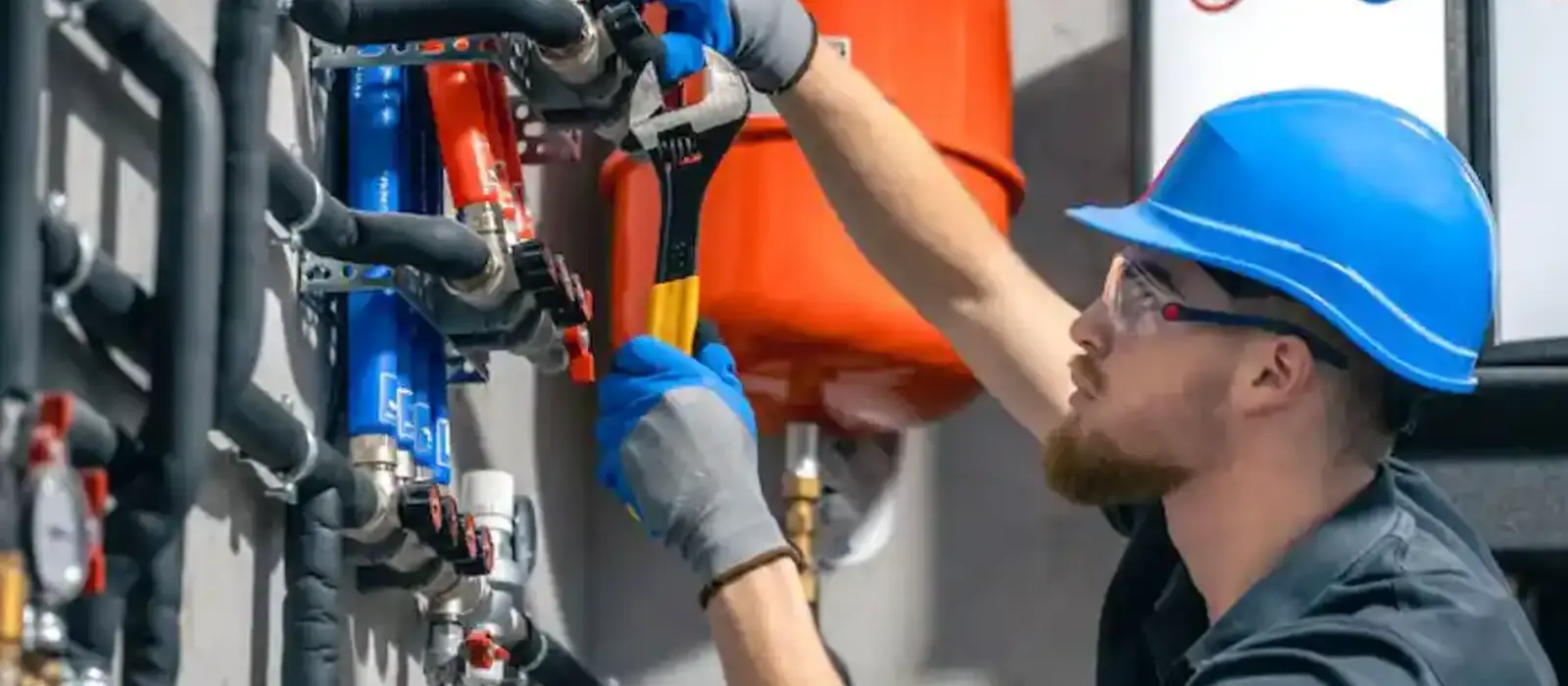
First checks when there is no heat
Start with the simple items.
- 1
Thermostat
Confirm it is set to heat and above room temperature, and replace the batteries if it has them.
- 2
Power
Check the boiler switch and the breaker. A tripped breaker can stop everything.
- 3
Pressure gauge
Cold pressure is often in a low range marked on the gauge. Very low or very high readings mean a problem.
- 4
Fuel
For oil, check the tank level. For gas, check that other gas appliances work.
Common boiler faults
A symptom often points to the cause.
| Symptom | Likely cause | Typical response | |
|---|---|---|---|
| Boiler will not fire | Ignition, flame sensor or control fault | Professional diagnosis | |
| Radiators cold at the top | Air in the system | Bleed radiators, check pressure | |
| Pressure keeps dropping | Leak or expansion tank issue | Professional leak test | |
| Loud banging | Scale or low water flow | Service and flush | |
| Water around the boiler | Valve, fitting or heat exchanger leak | Shut off and call, see [[boiler-repair | boiler repair]] |
Safety comes first
A boiler burns fuel and carries hot water under pressure. Two risks matter most: carbon monoxide and a gas leak. If you smell gas or a detector sounds, leave the house and call 911 or the gas utility before anything else.
Do not open sealed combustion parts, relight pilots you do not understand or bypass safety controls. The maker's guidelines and the International Plumbing Code (IPC) set how a boiler is vented and piped, which is why settings on the unit are not a place for guesswork.
- !Install and test carbon monoxide detectors on every level.
- !Never run a boiler with a damaged vent or visible soot.
- !Do not ignore a boiler that smells, smokes or trips breakers.
- !Shut off the unit and call if it leaks water onto electrical parts.
What a homeowner can do and what to leave alone
Bleeding radiators, checking pressure and replacing a thermostat battery are within reach. Opening the burner, adjusting the gas valve or replacing a heat exchanger are not. Those need training and tools, and a mistake can be dangerous.
Annual service is the best prevention. A technician cleans the burner, checks combustion and tests the safety controls. Ask for service before the heating season begins rather than after the first cold night.
Local note: winter risk and frozen pipes
Pennsylvania winters make a boiler failure more than an inconvenience. When the heat stops, pipes in exterior walls can freeze. Open cabinet doors on exterior walls, and keep the house as warm as you safely can.
If a pipe does split, see burst pipe repair. Homeowners in Bristol and Croydon with older homes often rely on boilers and radiators, so a pre-winter check is worth it. For permit questions on replacement, call Bensalem Township's Building and Planning office at 215-633-3644.
Repair or replace
A boiler that has run for decades with service may keep going. A cracked heat exchanger or a pattern of repairs each winter is a sign to price a replacement. Ask for a clear price on both options and compare the cost of one more repair with the cost of a new unit.
A replacement also lets you consider efficiency and controls. A plumber can look at the existing radiators and piping to see what a new boiler would need.
Gas or oil: why it matters for repair
A boiler that burns gas and one that burns oil share a water loop and little else. The fuel side has different parts, different safety controls and different service steps. A technician needs to know which you have before the visit.
Oil boilers also depend on a fuel delivery schedule. A tank that runs dry can look like a boiler failure. Check the gauge before you call, and keep a note of your last delivery.
What to write down for the plumber
A few details save time.
- ✓The model name and the serial number on the label.
- ✓The fuel type and the age of the system.
- ✓What the display or indicator lights show.
- ✓When the problem started and what changed.
- ✓Whether any radiators or zones still work.
Boiler not heating?
Call and share the model and what the boiler is doing. A plumber will tell you what to expect.
Common questions
Power, thermostat, low pressure, ignition faults and fuel issues are common causes. Start with the simple checks.
Many cold boilers read in a low range marked on the gauge. Check your manual, since models differ.
Yes, with care. Use the proper key, and check the pressure afterward.
We service common brands. Tell us the make and model when you call.
The township's Building and Planning office at 215-633-3644 can tell you what applies.