When a clogged drain is an emergency
Wastewater coming up through a floor drain, a toilet that will not flush, or sewage in a tub means the main line is blocked. Do not wait for morning. Standing wastewater damages flooring quickly and carries bacteria into the living space.
Call the 24/7 line and keep these steps in mind while a plumber is on the way. Same-day and after-hours visits are available when the schedule allows, and the call is answered at any hour. Safety steps matter as much as tools: what to do first is stop the water, and do not mix chemical cleaners. Drain repairs afterward follow International Plumbing Code (IPC) standards.
- !Stop running water everywhere in the house, including the washing machine and dishwasher.
- !Do not pour chemical drain cleaner into a backed-up line. It sits in the pipe and burns skin when a plumber opens the drain.
- !Move rugs, boxes and electronics away from the lowest floor drain or tub.
- !Note which fixtures are affected. A plumber can place the clog from that list alone.
What your drains are telling you
Where the symptom shows up points to where the blockage lives. These patterns come up again and again on service calls.
- ✓One sink drains slowly while every other fixture is fine: the clog is in that fixture's own trap or branch line.
- ✓A toilet bubbles when the shower drains: the vent or the line they share is partly blocked.
- ✓The lowest drain in the house gurgles or overflows when upstairs fixtures run: the main line is blocked below that point.
- ✓Drains clear for a few weeks, then slow again: grease, scale or roots are narrowing the pipe instead of fully blocking it.
- ✓A foul smell from a floor drain with no visible water: a dry trap or a partial blockage, and worth a look before it becomes a backup.
Which method fits which clog
No single tool clears every drain. The table lists the common choices and where each one stops being the right answer.
| Clog type | Usual cause | Method | Limit to know |
|---|---|---|---|
| Kitchen sink | Grease and food paste | Hand auger or cable machine | Heavy grease may need a jet to finish the wall of the pipe |
| Tub or shower | Hair and soap film | Small drum auger | Pulls the clog out, does not repair a broken line |
| Toilet line | Wipes, toys or paper | Closet auger, then cable | A line that clogs repeatedly may be damaged |
| Main sewer line | Roots, grease, collapsed joint | Large cable, then hydro jetting | A camera is the only way to see a break |
Kitchen sinks, tubs and the washing machine standpipe
Kitchen sinks fail more often than any other fixture because cooking fat cools inside the pipe and hardens. A hand auger breaks the plug, but the greasy lining stays behind and catches the next meal. That is why the same sink clogs again a month later.
Tubs and showers clog with hair wrapped around the drain stopper or the pop-up linkage. Pulling the stopper and clearing the first foot of pipe solves most of them. A washing machine standpipe is the third common culprit. Lint builds up, the standpipe overflows, and the laundry room floor floods mid-cycle.
If a drain keeps returning to slow, ask for a camera look instead of a third snaking. A sewer camera inspection shows whether the pipe is scaled, offset or cracked, and that changes the repair from cleaning to fixing.
Snaking, cabling and jetting: what each one really does
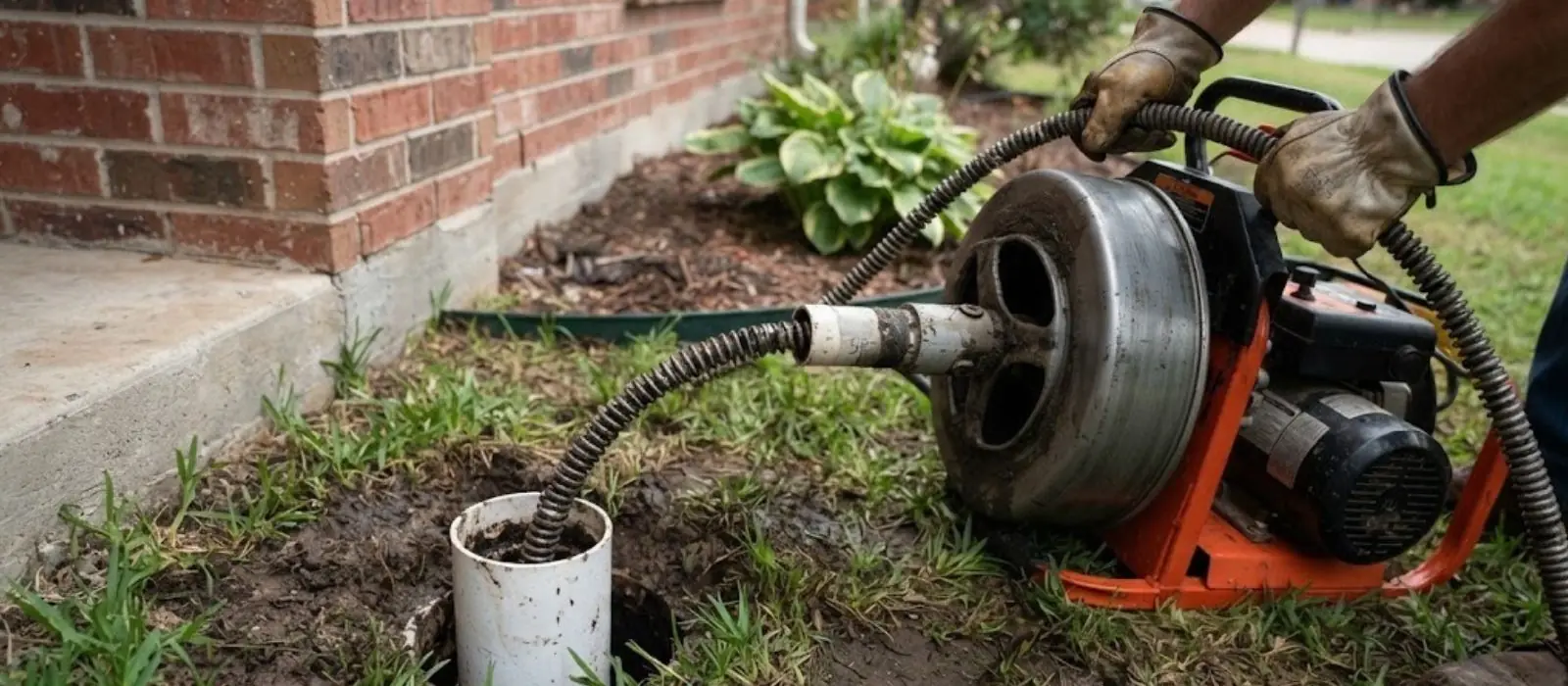
A hand snake works for the first few feet of a sink or tub line. A cable machine feeds a spinning steel cable through longer runs and cuts through roots and dense blockages. Both punch a hole through the clog, and the water drains again.
Jetting uses high-pressure water to scour the pipe wall. It is the better fix for grease and scale that keep coming back, and it is covered on our hydro jetting page. If the line is cracked, none of these tools repair it. At that point the conversation moves to sewer line repair.
Bensalem homes and the main line
Bensalem is the most populous municipality in Bucks County, spread over 21 square miles with housing of many different ages. Older sewer laterals are more likely to have offset joints where roots enter, so main-line stoppages tend to show up in the oldest housing first.
Ask a plumber to run the camera after the line is cleared if the house is old or if the stoppage is not the first one. It adds a short step and shows whether the clog was a one-time event. Neighbors in Croydon and Levittown call about the same pattern in their own blocks.
Drain backing up right now?
A plumber is on call all night. Call and describe which fixtures are affected.
What affects the price of drain cleaning
The price is set by the job, not by a flat template. Five things move it.
A note on insurance. Standard homeowners policies usually cover sudden water damage but often treat sewer or drain backup as an optional add-on, and a gradual clog is a maintenance item. Check your policy language and ask the agent whether a backup endorsement is in place.
Want your real number? Call (215) 714-6692 and describe the job.
Common questions
If more than one fixture is slow or backing up, especially the lowest drain in the house, the main line is the likely location. A single slow sink usually points to that sink's own branch.
Yes. The emergency line is answered 24 hours a day, every day, and a plumber can be scheduled for the same day when the schedule allows. Stop running water and call so we can plan the right tool for the blockage.
We advise against it for a fully blocked line. The chemical sits in standing water, can burn skin during the repair, and can damage older pipe. A mechanical clearing is cleaner and more predictable.
It depends on the cause. A hair clog usually stays gone. Grease, scale and roots rebuild, so a recurring problem deserves a camera inspection and possibly hydro jetting.
Yes. Tell us the unit and whether the clog could be in a shared stack. A shared line may belong to the building owner, so a landlord's approval can matter before work starts.
Yes. We dispatch to Levittown, Bristol, Croydon, Feasterville-Trevose and Langhorne as well as every part of the township.