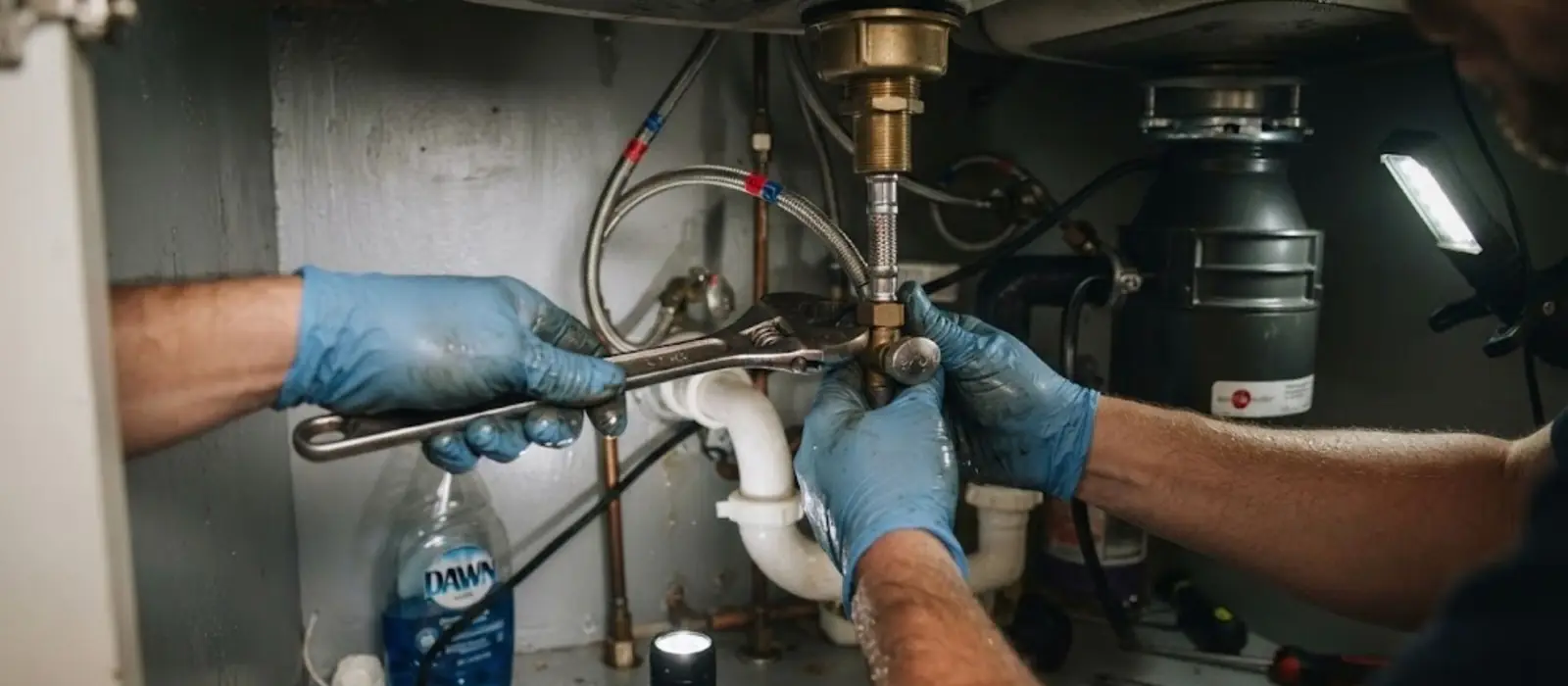
Meet the parts under your sink
Looking from the wall to the drain, you will usually see these.
| Part | What it does | Common problem | |
|---|---|---|---|
| Shutoff valves | Stop hot and cold supply to the faucet | Seized or weeping at the stem | |
| Supply lines | Flexible hoses from the valves to the faucet | Cracking, bulging or leaking at the nut | |
| P-trap | Curved pipe that holds a water seal against sewer gas | Clogs and loose slip nuts | |
| Tailpiece and drain | Carry water from the sink to the trap | Leaks at the basket gasket | |
| Disposal and dishwasher connection | Share the drain | Leaks and clogs, see [[garbage-disposal-repair | disposal repair]] |
Reading a leak by where the water is
A drip at a connection runs along the pipe and falls from the lowest point, so the source is above the drip. Dry the pipes with a paper towel, run the water and watch where the first bead forms. That is the leak.
Water that appears only when the sink drains points to the trap or the drain. Water that appears all the time points to a supply line or valve. A damp cabinet floor with no active drip may be from past leaks and needs drying. A trap and drain should follow International Plumbing Code (IPC) standards, including the trap arm length and a proper vent.
Quick fixes a homeowner can try
These are low risk when done carefully.
- ✓Hand-tighten a loose slip nut on the trap, and use plastic washers if they are worn.
- ✓Replace a cracked supply line with a braided one of the same length.
- ✓Clear a trap by removing it over a bucket and rinsing it out.
- ✓Tighten the basket strainer nut from underneath if the drain leaks at the sink.
- ✓Place a small container in the cabinet to catch drips and check it daily.
When to call a plumber
A seized shutoff valve is the biggest red flag. Forcing it can break the stem and release a stream of water. If the valve will not turn or drips after you close it, a plumber should replace it. The same goes for corroded pipe, a leak you cannot trace and any pipe with green or white crust.
A repeat clog is another sign. A sink that backs up after the trap is clean has a problem further along, and drain cleaning may be the answer. If you want to move the sink or add fixtures during a remodel, the layout is a plumbing installation question.
Local note: permits and who to ask
Replacing a trap or a faucet usually does not call for a permit. Moving or adding plumbing often does. Bensalem Township's Building and Planning office at 2400 Byberry Road handles plan review, permits and inspections for plumbing, and its inquiry line is 215-633-3644. The office posts hours of 8 a.m. to 4 p.m. on weekdays.
Ask them before a kitchen remodel. If you live near the border in Croydon or Feasterville-Trevose, confirm which township your address falls under, since the office depends on the municipality.
Protecting the cabinet
Cabinet bottoms swell when they get wet, and the damage spreads quickly. A plastic tray or a leak alarm under the sink gives you an early warning. Do not store cleaning chemicals where a leak could mix them.
Once a year, open the cabinet, run the water and look at every joint. It takes two minutes. Catching a weeping connection that way costs a small part. Catching it after the cabinet rots costs a lot more.
A cabinet check you can do in two minutes
Empty the cabinet, put a dry paper towel under each connection and run the faucet and the disposal for a minute. Any spot where the towel turns wet marks a connection that needs attention. This test catches weeping joints that a quick look misses.
Press the cabinet floor with your finger as well. A soft or spongy spot means water has been getting in for a while, and the floor should be dried and repaired before you put things back.
Parts worth replacing while the cabinet is open
If you are already under there, these are cheap upgrades.
- ✓Old rigid supply lines with braided stainless connectors.
- ✓A shutoff valve that is stiff or shows green corrosion.
- ✓A brittle plastic trap with cracks at the threads.
- ✓A strainer basket gasket that is flattened or hard.
- ✓A dishwasher drain loop that sags below the disposal inlet.
Leak under the sink right now?
Close the shutoff valves and call. A plumber will plan the repair.
Common questions
A dry trap or a dirty disposal baffle is common. Run water, and clean the baffle.
Hot is usually on the left. The supply line also runs to the left side of the faucet.
Condensation on cold lines is normal in humid weather. A steady drip is not.
Yes, with a bucket and care. Check the fit and run water to test for leaks.
Moving plumbing often does. Ask Bensalem Township Building and Planning at 215-633-3644 before you start.