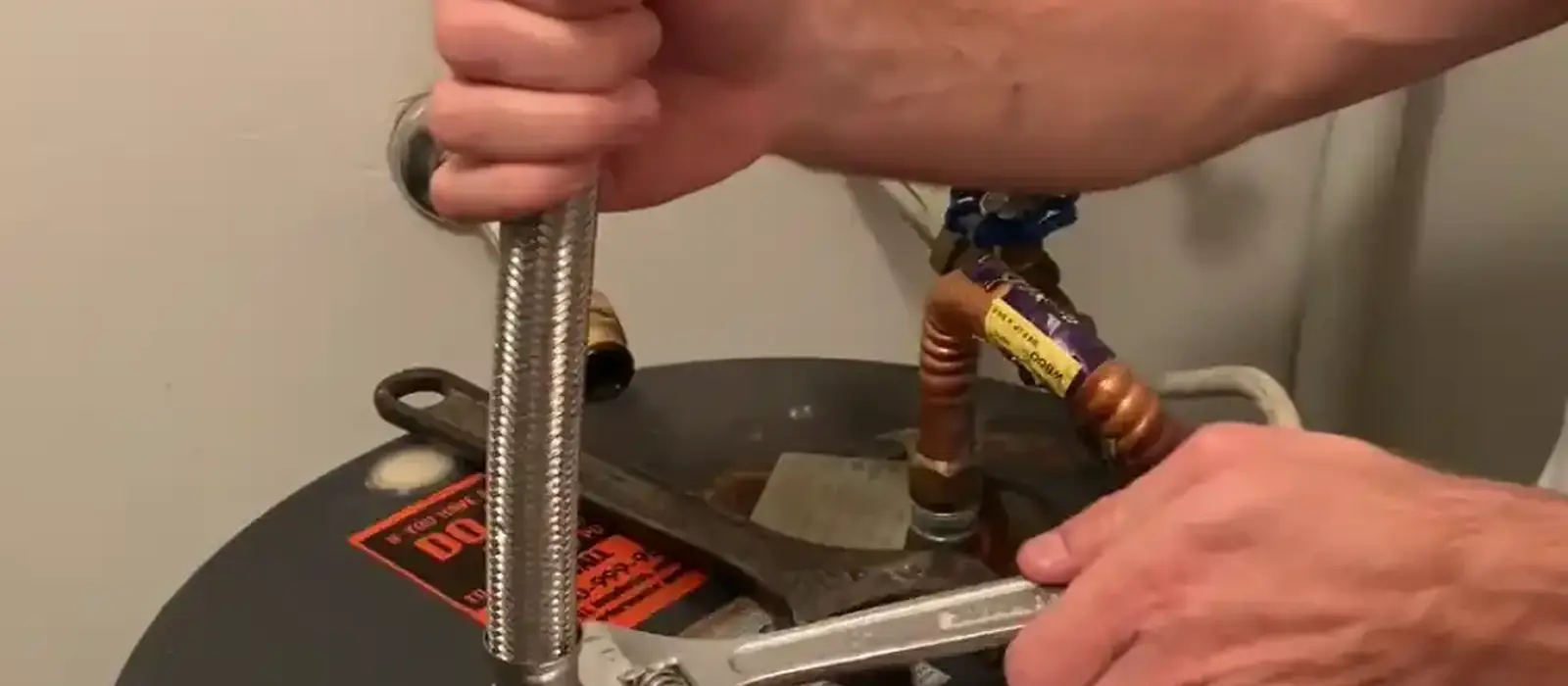
What the anode rod does
Water is slightly corrosive to steel, and a tank is a steel shell holding hot water all day. The anode rod is made of a more reactive metal, usually magnesium or aluminum. The rod gives up its metal first, so the tank wall is spared. Plumbers call it a sacrificial anode for that reason.
Once the rod is thin or coated, the protection ends. The tank begins to corrode from the inside, often at the bottom seam. That is why many water heater leaks happen without warning.
The outside looked fine, and the inside was failing for years. The maker's guidelines say which rod fits the tank, and relief valve testing follows the standards the IPC references.
Signs the rod may be spent
None of these prove it, but several together are worth acting on.
| Sign | What it suggests | What to do | |
|---|---|---|---|
| Rotten-egg smell from hot water | Bacteria reacting with the rod or a spent rod | Check the rod, flush the tank | |
| Rusty or brown hot water only | Tank corrosion beginning | Inspect the rod soon | |
| Popping or rumbling noises | Sediment on the bottom, a separate issue | Flush the tank | |
| Heater is past ten years | Rod likely long spent | Plan for [[water-heater-replacement | replacement]] |
How the rod is checked and replaced
Steps vary by model, but the job follows this outline.
- 1
Shut off power or gas
Turn the unit off, and close the cold-water supply valve.
- 2
Relieve pressure and drain a few gallons
Open a hot tap upstairs and drain some water from the tank so the rod can come out.
- 3
Loosen the rod
Use a long socket and a breaker bar. The hex head on top is often very tight, and a plumber has the leverage and the clearance.
- 4
Inspect and swap
A rod worn to the steel core or coated with scale is spent. Install a new rod with thread tape, refill and check for leaks.
When replacing the rod will not help
A rod protects a healthy tank. It cannot repair one that is already leaking. If you see water pooling around the base, the tank has failed, and you are in water heater repair or replacement territory instead. A new rod in a tank with a rusted seam buys nothing.
Clearance is another real limit. Many heaters sit under a low ceiling or in a closet, and a rod several feet long cannot come straight out. A flexible rod solves it, and a plumber carries one.
Local note: hard water, test your tap
How fast a rod wears depends on the water. Hard water and some water chemistries use it up faster. We do not quote a hardness figure for Bensalem, because it varies and we cannot state it from a primary source. Check your water bill for your utility's name and ask it for its annual water quality report, or use a simple test strip at your tap.
If the report or the strip shows hard water, check the rod more often. If you live in Levittown or Croydon, the utility that serves your address may be different from a neighbor's across the municipal line, so ask your own utility.
A simple maintenance routine
These habits extend the life of a tank.
- ✓Check the rod every few years, sooner if the water is hard.
- ✓Flush a few gallons from the drain valve once a year to move sediment.
- ✓Test the temperature and pressure relief valve once a year.
- ✓Write the install date on the tank so you know its age.
- ✓Plan a replacement when the heater is well past a decade old.
What happens if you never check the rod
Many people never open the top of the tank until something goes wrong. By then the rod may be a thin wire or gone entirely, and the steel has been exposed for a long time. A tank in that state has already used up much of its life, and a new rod cannot reverse the damage.
That is the real value of an early check. A rod inspected while the tank is sound can be swapped, and the tank may run for years longer. A rod inspected after a leak is only a post-mortem.
Choosing between rod types
Rods come in a few metals, and the right one depends on your water.
- ✓Magnesium rods protect well and are common in soft to moderate water.
- ✓Aluminum rods last longer in some water but are not preferred by every manufacturer.
- ✓Powered anode rods use a small electrical current and do not wear out the same way.
- ✓A rod that smells of sulfur in the water may point to a different metal or a flush.
- ✓Check your water heater's manual before swapping to a different rod type.
Not sure what you will find inside?
Call and a plumber will tell you whether the rod is worth checking or the tank needs a swap.
Common questions
Many are checked every few years and replaced when worn. The interval depends on the rod and the water, so inspect rather than guess.
Many homeowners can with the right socket. A tight rod or low clearance is where a plumber earns the visit.
No. It prevents corrosion. A tank that has started to leak needs repair or replacement.
Bacteria in the tank can react with the rod. A flush or a different rod can help, and a plumber can advise.
Check your water bill for the utility's name, then ask that utility for its annual water quality report. It covers your address, not the whole township.