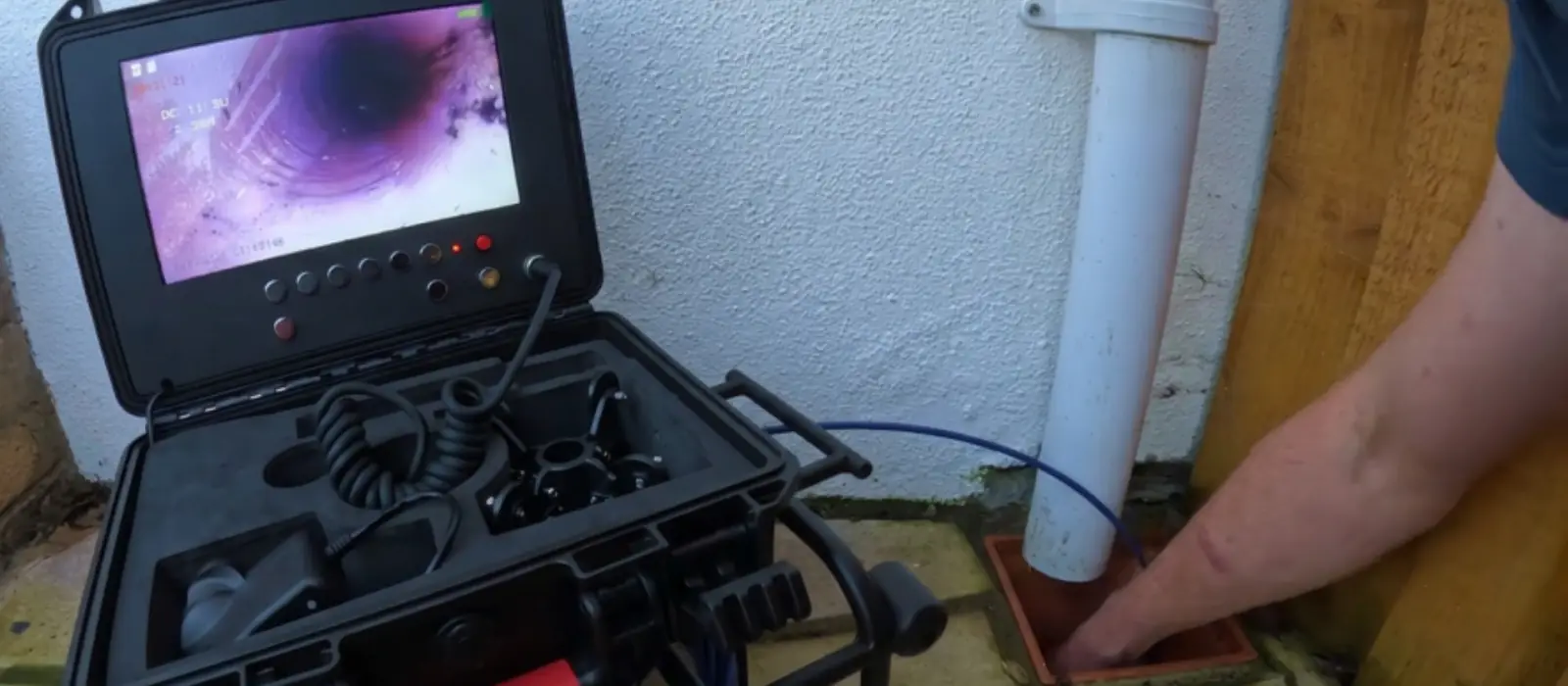
What the camera actually shows
The camera head has lights and a cable marked in feet. As it travels, the plumber watches a live feed and notes distances to any defect. A locator on the surface can mark the spot above ground so a repair can be planned without a search.
The pipe wall tells a story. Scale and rough texture point to age and buildup. Hairline cracks and offset joints point to movement. A pooling section called a belly shows where the pipe has settled.
Roots show as hair-like masses at joints. Inspection findings are measured against the International Plumbing Code (IPC) standards for drain slope and joints, which is why a recorded pass is useful for repair planning.
How an inspection visit runs
A typical visit follows four steps.
- 1
Find access
A cleanout is best. If none exists, the camera may enter through a toilet flange or vent.
- 2
Clear the way
If the line is blocked, a plumber clears it first so the camera can travel.
- 3
Record the pass
The camera runs to the street connection while a recording is made.
- 4
Review together
You see the footage, hear the findings and get options for any defects.
What the footage can reveal
Each defect carries a different next step.
| What the camera sees | What it means | Usual next step | |
|---|---|---|---|
| Roots at a joint | Water is finding a gap | Clear roots, then consider lining or repair | |
| Hairline crack | Movement or age | Monitor or repair, depending on location | |
| Offset joint | Pipe sections have shifted | Spot repair, see [[sewer-line-repair | sewer line repair]] |
| Belly with standing water | Pipe has settled | Repair or replace that section | |
| Heavy scale or grease | Buildup narrowing the pipe | Jetting, see [[hydro-jetting | hydro jetting]] |
Before you buy an older Bensalem home
Sewer laterals are out of sight, and sellers rarely know their condition. A camera pass during the inspection period gives the buyer facts to negotiate on. A sound line is a green light. A failing line is a known cost that can be priced into the deal.
Ask the inspector to run the camera all the way to the street connection and to give you the recording. If the footage shows damage, get a repair quote before you waive any contingency. Neighbors in Levittown and Croydon often face the same question when buying homes of similar age.
When a camera inspection is the right first step
Consider one if any of these apply.
- ✓A drain has backed up more than once in a year.
- ✓A cable stopped at the same point twice.
- ✓You are buying or selling an older house.
- ✓A patch of lawn above the line is sunken or soggy.
- ✓You are planning a basement bathroom or remodel that adds load to the line.
Want to see inside your line?
Call to book a camera visit and get a clear price.
Permits and records
An inspection itself does not usually need a permit, but any repair that follows may. Bensalem Township's Building and Planning office at 215-633-3644 can tell you what applies to repairs at your address.
Keep the recording. If you later file an insurance claim or sell the house, dated footage is useful evidence of the pipe's condition.
What affects the price of an inspection
Pricing depends on what it takes to run the camera.
Insurance note. An inspection is usually a maintenance cost, not an insured one. Keep the footage if a later claim arises.
Want your real number? Call (215) 714-6692 and describe the job.
Common questions
Many take an hour or two when access is easy. A blocked line adds time for clearing.
Ask for the recording when you book. It is useful for repairs, negotiations and insurance.
Often yes, through a toilet or a vent. We explain the access plan before starting.
You get the findings and repair options. There is no obligation to repair at the same visit.
Not always, but a pass before the warranty ends or before a remodel can catch builder defects.