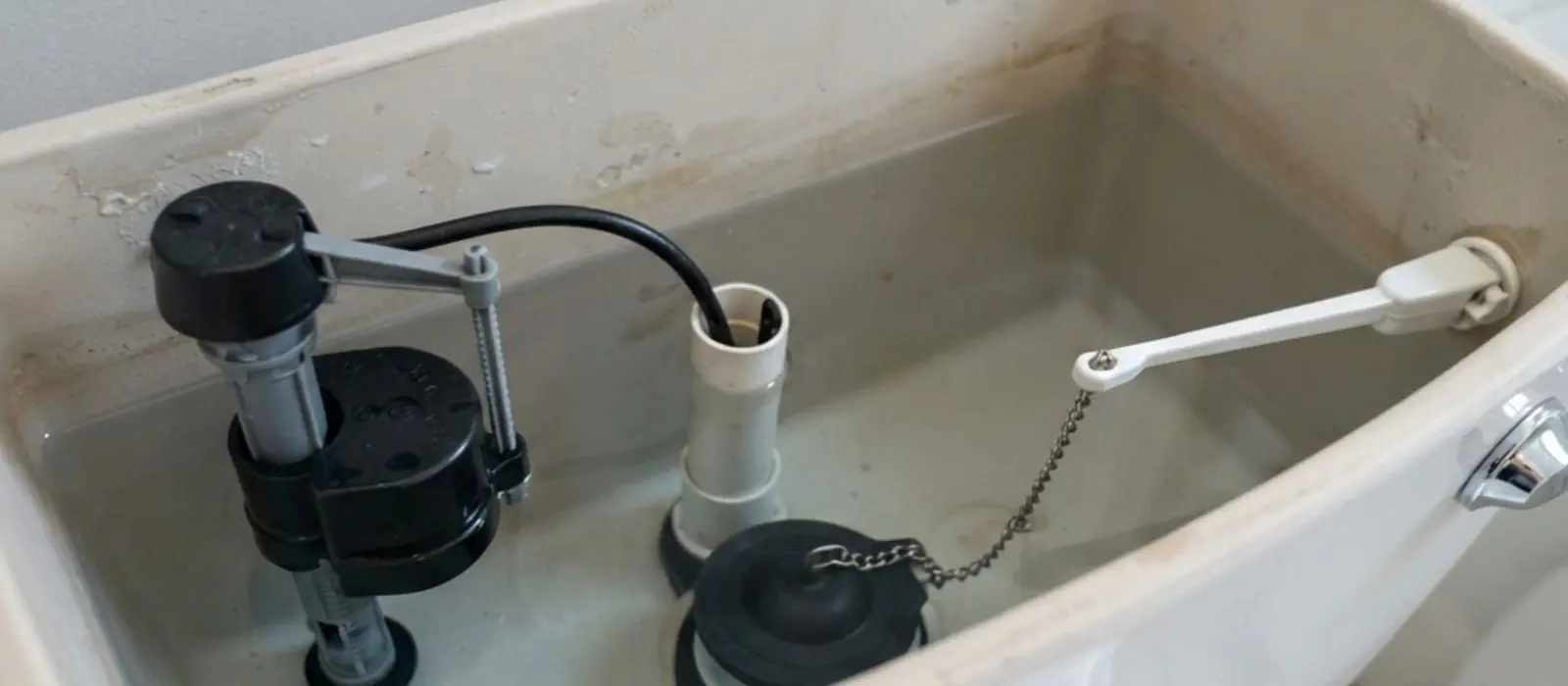
Find the cause in five minutes
These steps separate the three usual causes.
- 1
Take off the tank lid
Set it on a towel, and flush while you watch the tank.
- 2
Dye test
Add a few drops of food coloring to the tank and wait fifteen minutes without flushing. Color in the bowl means the flapper is leaking.
- 3
Check the water level
Water running into the overflow tube means the fill valve or float is set too high.
- 4
Listen
A hissing refill with no flush points to the fill valve itself.
Problem, cause and fix
Match what you see to the part.
| What you see | Likely part | Typical fix | |
|---|---|---|---|
| Color in the bowl after the dye test | Flapper | Replace the flapper, clean the seat | |
| Water spills into the overflow tube | Float or fill valve | Lower the float or replace the valve | |
| Constant hissing from the tank | Fill valve | Replace the valve | |
| Handle sticks or chain is tangled | Chain or lift arm | Adjust the chain length | |
| Water at the base of the bowl | Wax ring or bolts | Not a running problem, see [[toilet-repair | toilet repair]] |
Flapper, float and fill valve
The flapper is a rubber seal at the bottom of the tank. Over time it warps or collects mineral buildup, and it stops sealing. Replacement kits are universal for many toilets, and swapping one takes a few minutes.
The float controls how high the tank fills. If it is set too high, water spills into the overflow tube and the valve keeps running. Lowering it fixes the problem for free.
A fill valve that hisses or fails to shut off needs replacement, and a kit is inexpensive and simple to install. Replacement parts should follow the toilet maker's guidelines, and the IPC standards for fill valves cover anti-siphon protection.
What to buy and what to check
Take the old part to the store if you are unsure.
- ✓A flapper that matches the size of your flush valve, two inches or three.
- ✓A universal fill valve with the right height range for your tank.
- ✓A new supply line if the old one is cracked or stiff.
- ✓A soft cloth to clean the flapper seat.
- ✓A small bucket and a sponge for the leftover water.
Local note: the water bill is your meter
A running toilet shows up on your water bill, and your bill comes from your water utility. We do not quote a rate because it varies by utility and address. Your bill names the utility, so ask it how to read your meter and whether it can show your usage history.
To test for hidden leaks, shut off every tap and appliance and watch the meter's low-flow indicator. If it moves and the toilet checks out clean, the leak is elsewhere. Neighbors in Levittown and Bristol ask the same question, and the next step is leak detection.
When it is not just the toilet
If the flapper and valve are new and the toilet still runs, the flush valve seat may be pitted, or the tank may have a hairline crack. In older toilets, replacing the whole fixture can be cheaper than chasing parts. A toilet that clogs and runs may also have a drain problem that no part will fix.
Call a plumber if water is at the base, if the shutoff valve will not close or if the toilet is cracked. Valves that have not moved for years can break when forced, so do not crank on a seized one.
A few more things that make a toilet run
Not every running toilet has a bad flapper. A flush valve seat that has corroded or built up mineral deposits can let water seep past a brand new flapper. Rubbing the seat gently with a non-abrasive pad often restores the seal.
The refill tube is another small culprit. If it sits inside the overflow tube below the water line, it can siphon water out. Clip it above the overflow opening, and the problem stops.
Quick safety and cleanup tips
Take a few precautions before you start.
- ✓Turn off the supply valve behind the toilet before you replace parts.
- ✓Flush once to empty the tank, and sponge out the last water.
- ✓Wear gloves, since tank water is not sterile.
- ✓Do not overtighten plastic nuts, which crack easily.
- ✓Check for leaks after an hour and again the next morning.
Toilet still running after the fix?
Call and describe what you tried. A plumber will tell you what comes next.
Common questions
A leaking flapper can waste a large amount over a day without any sound. The dye test finds it.
Yes. Food coloring is harmless in a toilet tank. Flush when the test is done.
No. Flush valves come in different sizes. Match the size or bring the old part.
A slow flapper leak refills the tank at intervals. You hear it when the house is quiet.
Turn off all water use and watch the low-flow indicator on the meter. If it moves, water is leaving the system. Your water utility can show you where the meter is.