What to do when sewage is in the house
Wastewater in a tub, shower or floor drain is a health and property issue. It carries bacteria, it soaks into flooring and it does not stop until the line is cleared. Call at any hour. Same-day service is offered when the schedule allows.
While you wait, take these steps. Cleanout access is something the International Plumbing Code (IPC) standards address for new work, and the maker's guidelines for cable and jet equipment limit how hard an older pipe can be pushed.
- !Stop all water use, including laundry and dishwashers.
- !Keep children, pets and bare feet away from the affected area.
- !Open windows for ventilation if the odor is strong.
- !Photograph the damage and call your insurance agent after the line is cleared.
How a main line cleaning works
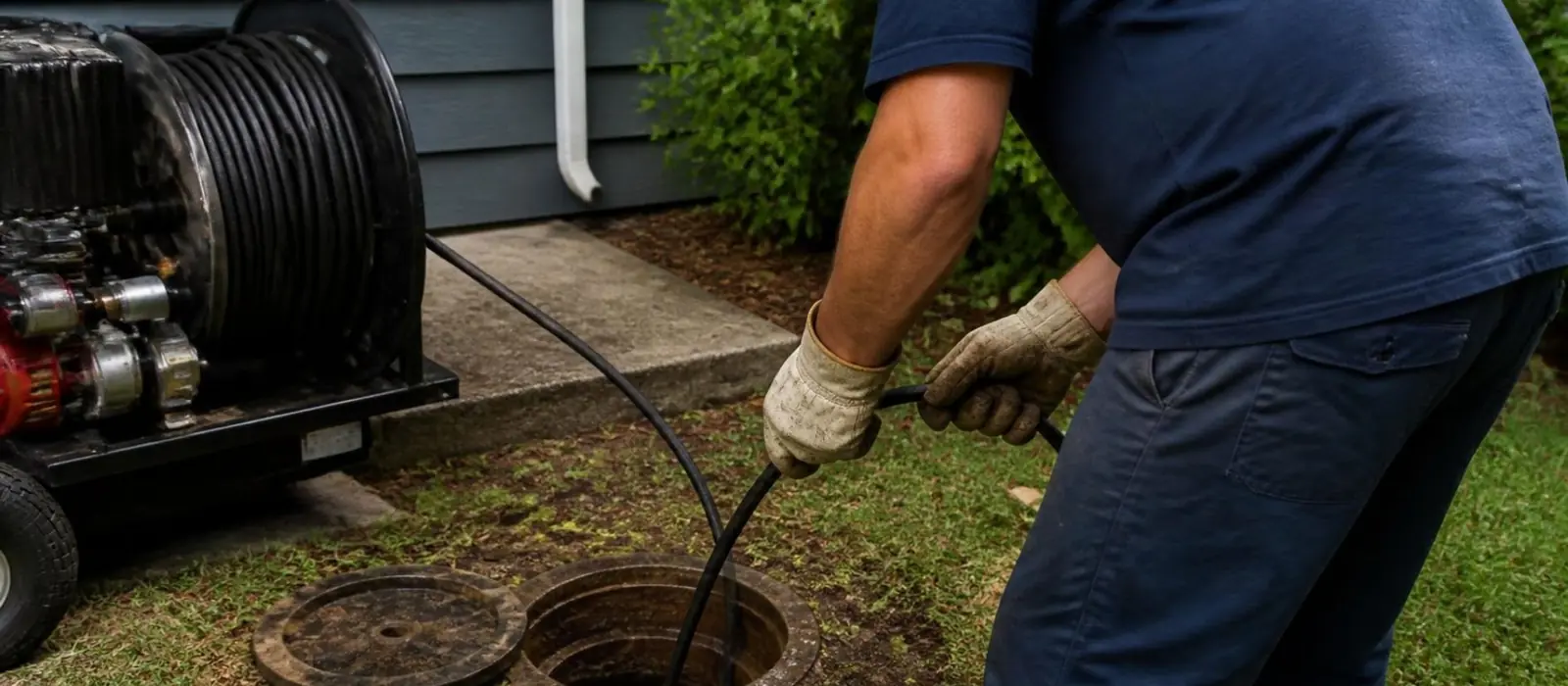
The plumber finds the cleanout, usually in a basement or at the front of the house, and feeds a heavy cable through it. A cutting head on the end grinds through roots and grease. Once water flows, a jetter or a camera pass can follow to finish the cleaning and show the pipe condition.
If the cleanout is missing, the plumber may pull a toilet or use a roof vent to reach the line. A new cleanout is a worthwhile addition, because it makes every future visit faster. Ask about it at the same visit.
What blocks a main line
Most main-line stoppages fall into one of four causes.
| Cause | Telltale sign | Typical fix | |
|---|---|---|---|
| Roots | Slow drains that worsen in growing season | Cut with a cable, then jet or repair | |
| Grease and wipes | Backups after heavy kitchen use or flushing wipes | Cable and jet | |
| Scale and age | Gradual slowing over years | Jet, then inspect | |
| Collapsed or offset pipe | Repeat backups after cleaning | Camera, then [[sewer-line-repair | repair]] |
Ways to reduce main-line backups
A few habits lower the odds of a repeat.
- ✓Never flush wipes, even those labeled flushable.
- ✓Keep fats, oils and grease out of kitchen drains.
- ✓Know where your cleanout is and keep it accessible.
- ✓Plant trees away from the sewer lateral, and ask about root control for existing ones.
- ✓Schedule a camera check if the line has backed up more than once.
Main line backing up?
Call now. A plumber will start planning the visit on the phone.
Why the lowest drain overflows first
Water seeks the lowest open point. When the main line is blocked, wastewater backs up until it finds an exit, which is usually a basement floor drain, a shower or a tub on the lowest level. Homes with finished basements face the worst damage because flooring, drywall and stored items sit at that level.
If your lowest drain gurgles when an upstairs toilet flushes, the line is already struggling. Call before it overflows. A backwater valve can protect a basement from future backups, and it is worth asking about at the visit.
Neighbors and shared lines
Some homes, such as rowhouses or twin houses, share a lateral or a section of line with a neighbor. A blockage downstream may affect several homes at once. If your neighbor reports the same problem, the clog is probably past your own cleanout.
In that case, the plumber may need to clear from the street side, and the municipality may be involved. Bensalem Township can be reached at 215-633-3600. It also pays to compare notes with the neighbor, since a camera on one side can help the other.
What shapes a main line cleaning quote
A main line is priced by access and severity.
Insurance note. Sewer backup is often excluded unless a water backup endorsement is on the policy. Check yours before an emergency, not after.
Want your real number? Call (215) 714-6692 and describe the job.
Common questions
A home with no history may never need a scheduled cleaning. A home with repeat backups may benefit from an annual or periodic plan.
Yes. Call the emergency line any night, weekend or holiday. A main line backup is urgent, and a plumber can be scheduled for the same day when the schedule allows.
A professional cleaning with the right head is safe for sound pipe. A camera check first protects older or damaged lines.
It is a capped access pipe on the sewer line. It lets a plumber reach the main without removing a toilet.
Not if the pipe is damaged. Roots and cracks need repair, as covered in sewer inspection.
Yes. See commercial plumbing for restaurants and multi-unit buildings.